

Brut and Dosage: What Do They Actually Do?
Dosage is the sugar added to sparkling wine just before bottling. It sets the sweetness on the label, but its real job is balance, not making the wine sweet.
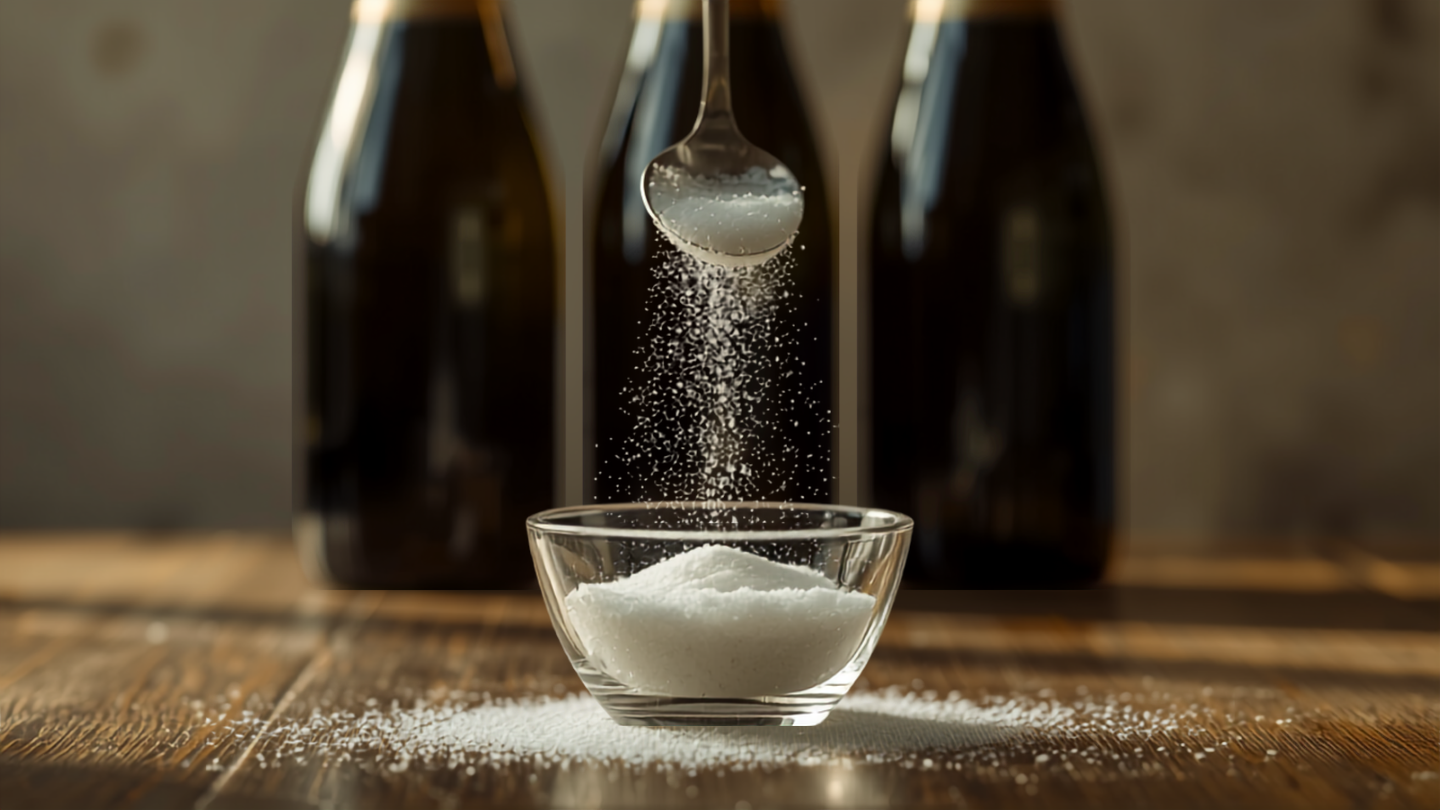
Dosage refers to the amount of sugar added to a sparkling wine right before it's sealed, and its sweetness level is on the label, from bone-dry Brut Nature to the sweeter styles. In our monthly selections you'll meet a range from Brut Nature to Brut. What often surprises people is that a wine with dosage doesn't mean it tastes sweet. The sugar's purpose is balance, not sweetness.
Key takeaways
The sweetness term on the label, Brut, Extra Brut, Brut Nature, is defined by the dosage.
Dosage's main job isn't sweetness, it's balance. A little sugar softens sharp acidity
Less dosage means a brighter, crisper wine, with more of the grape and the vineyard showing through.
Brut Nature styles used to be rarely seen, but climate change has changed that.
Think “Extra Dry” means dry? You're in for a surprise. It's actually one level sweeter than Brut.
Why add sugar at all?
Picture biting into a lemon wedge. Sharp and acidic, right? Add a pinch of sugar and it softens that edge. Dosage does the same for sparkling wines, which all have varying levels of high acidity. It rounds things out and makes the wine more approachable, with softer acidity and fuller body. The dosage is part of a mix of wine and sugar called the liqueur d'expédition, added at the very end, just before the final cork goes in. You might be surprised that the sugar is not meant to make the wine taste sweet, unless the winemaker wants it to, which would mean a sweeter style higher up the scale. At Brut and below, it doesn't sweeten the wine, it balances it. It's also one of the last moments a winemaker has to adjust the wine to fit the style they are after.
What do the sweetness terms actually mean?
Every bottle carries a sweetness term telling you how much sugar is in it, measured in grams per liter.
Brut Nature: 0 to 3 g/L, no sugar added (any sugar is residual, not added)
Extra Brut: 0 to 6 g/L
Brut: under 12 g/L, and the most common style by far
Extra Dry: 12 to 17 g/L
Sec: 17 to 32 g/L
Demi-Sec: 32 to 50 g/L
Doux: over 50 g/L, dessert-sweet and now rare to see
Two items worth knowing.
The names aren't intuitive. Extra Dry is actually a step sweeter than Brut, not drier and is the first level where sugar becomes noticeable.
A bottle may be labeled Brut, even though it’s brut nature or extra brut. Producers know that consumers like Brut and think most consumers have no idea what the other terms mean, so they just say Brut.
What does little or no dosage taste like?
Brighter and crisper, with a sharper edge and can sometimes be described as racy. With little or nothing added, you taste the grape more directly. For most producers it’s about producing wine that feels honest and allows you to taste the wine's true character.
Why is bone-dry getting more common?
Until recently, almost all Champagne was Brut. Two things are changing that. One is climate change. Grapes ripen more fully now, which balances the acidity on its own and reduces the need to add any sugar for balance. The other is a wave of small growers who want their wine to show the grape and the vineyard as directly as possible, so they're dialing dosage down or dropping it altogether. Brut Nature, once a rarity, is now much more commonly found.
For big name Champagne houses, sugar is not only about balance. It also helps produce a consistent house style from year to year, by smoothing out the differences between vintages. At the cheaper end, it can do quieter work, masking faults of a wine that isn't much to begin with.
Among quality wines, neither style is better. An Extra-Brut, Brut or Brut Nature are each doing the same thing by showing the winemaker's vision. Knowing a little more about what dosage does and what the word on the label tells you, gives you a little insight into what’s being poured in your glass.
A couple of common questions
Does Brut mean dry?
Yes. Brut is still the most common style and tastes dry, with under 12 grams of sugar per liter. Most Champagne you'll find in stores is Brut. Sparkle-ist selections are always a range from Brute Nature to Brut.
Why is Extra Dry sweeter than Brut?
Blame history, not logic. The names come from a time when Champagne was dosed much sweeter than it is today, and as tastes shifted drier over the years, terms were not changed, new terms were added. That's a story worth its own post, which we'll get to.
Does more sugar mean lower quality?
No. Sweeter styles like Demi-Sec are made that way on purpose, often for dessert or rich, spicy food. It’s the quality that matters, not the dosage.