

2026, The Earliest Harvest Champagne Has Ever Seen
History was made in Champagne this year. I was there for the earliest harvest on record, and the season that led up to it was as rough as the harvest was early.
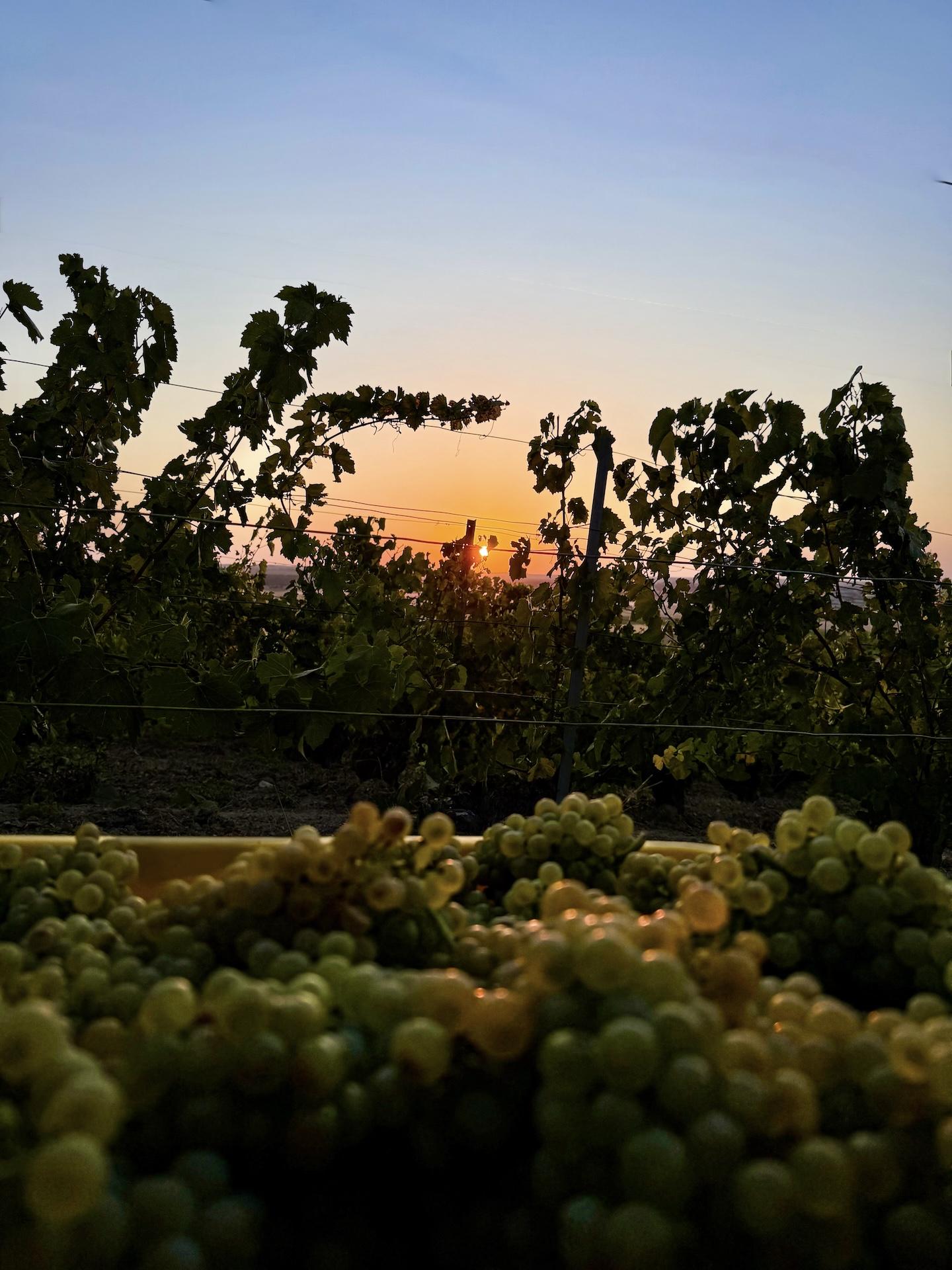
History was made in Champagne this year. The 2026 harvest started on August 12th, the earliest official start date since records began in the early 1900s. I was there in Montgueux for it, and the season that led up to it was as rough as the harvest was early.
Key takeaways
Champagne's 2026 harvest opened August 12th, the earliest start on record.
Repeated heat waves and a season with almost no rain pushed ripening far ahead of schedule.
Multiple spring frosts cost many growers 30% to 90% of their fruit.
Typical yields run 10,000 to 12,000 kg per hectare. This year's average could fall closer to 7,000, with some growers as low as 3,000.
Producers are optimistic on quality, though it's too early to say for sure. Quantity will be low either way.
Why did harvest start so early?
Every year, the CIVC, or Comité Interprofessionnel du Vin de Champagne, Champagne's governing body, sets the official start date for harvest across the region. They test sugar and acidity levels in the grapes and check for disease pressure, village by village, then stagger start dates over two to three weeks. Producers can request a waiver to pick earlier if conditions in their own vineyard call for it. This year, the CIVC set the region's opening date at August 12th. Nothing in the record books has started earlier.
What I saw in Montgueux
This was my third year in Champagne for harvest. I go every year to work with a producer whose parcels sit in Montgueux, one of the first villages to start picking. We picked our first grapes on August 10th this year, and a couple of nearby producers even started on the 8th. Compare that to August 20th last year, and September 17th in 2024. That's a five-week swing in just two years. Crazy.
A rough year in the vineyard
Multiple spring frosts killed budding grapes across the region. Many producers I spoke with lost 30% to 40% of their fruit to frost alone, and some lost as much as 70% to 90%. Then came back-to-back heat waves that sped up ripening, on top of a season with almost no rain. Less water and faster ripening meant smaller grapes, and smaller grapes mean less juice in the press.
How much smaller is the crop?
In a normal year, producers typically bring in 10,000 to 12,000 kilograms of grapes per hectare. This year, that average could end up closer to 7,000 kilograms per hectare region-wide, though the final numbers are still being sorted out. Some growers I met with, hit hardest by frost and left with unusually small grapes, are looking at yields as low as 3,000 kilograms per hectare. That's separate from Champagne's official marketable yield cap, which the CIVC sets annually to manage supply and demand rather than reflect what a vineyard can actually produce. For 2026, that cap dropped to 8,800 kilograms per hectare, the lowest it's been since 2020.
So what does this mean for your glass?
Most of the producers I talked to are optimistic. It's too early to call the quality for certain, but the general sense is that it'll be good. What's already clear is that there won't be much of it. The big houses have the reserves and scale to weather a year like this just fine. For the small growers we work with, and small producers everywhere, a season like 2026 is a reminder of how much is completely out of their hands, and how much skill it takes to make something worth drinking anyway.
A couple of common questions
Will less Champagne mean higher prices?
Not necessarily, and not right away. Champagne producers keep reserve wine from bigger harvests specifically to blend into leaner years like this one, so a rough vintage doesn't automatically mean a shortage on shelves.
When will I get to taste 2026 Champagne?
Most Champagne is non-vintage. By law, non-vintage has to age a minimum of 15 months before release, and vintage Champagne needs a minimum of 36 months. That means the earliest 2026 grapes could show up in a bottle is more than a year from now for a non-vintage blend, and closer to three years out if a producer declares 2026 as a vintage year.